In 2008, California leaders proposed a 9.3 percent tuition increase across all University of California (UC) schools. This was a wake-up call because at that time, fees had doubled within the past five years and had increased over 100 percent within the last decade. The fee increase would severely hurt UCLA first generation students’ ability to attend college, who were primarily People of Color.
In effort to make higher education accessible for all qualified students, six UCLA students and I lobbied as part of the Bruin Lobby Corps (BLC), the official legislative advocacy wing of UCLA. We met with the other eight UC schools, formed a unified UC agenda, and lobbied. As a result, our UCLA corps met with 50 California State Senate and California State Assembly members in Sacramento and in Southern California, encouraging state leaders to prioritize higher education.
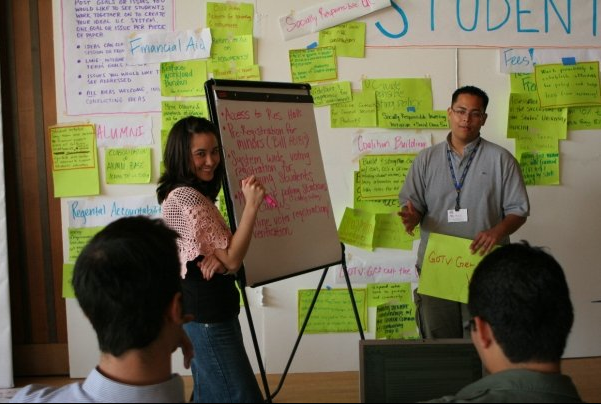
Meanwhile, during the 2008-2009 school year, many student advocacy organizations approached BLC and asked if we could lobby on behalf of their causes. Our seven-person team lacked the bandwidth as we were hard at work on the UC-wide initiative. However, we wanted to help and held “Lessons in Lobbying” sessions, open to all UCLA students and organizations.
In the “Lessons in Lobbying” sessions, we transferred lobbying knowledge to 75 students, representing 15 organizations. First, we shared the etiquette of lobbying with our peers. If the students followed our advice such as “no elevator talk” and sending a thank you note after meeting with the government representative, the representative would feel encouraged to receive the students and their message.
Another piece of knowledge we shared was how the UCLA groups could develop its power source. We encouraged the organizations to think of how their cause resonated with other UCLA or UC school student groups’ causes. By joining forces with like-minded organizations, they could create aggregate power by virtue of voter power. If groups did not have power in numbers, we encouraged members to think of personal stories that could persuade someone to support their cause. Personal stories are powerful because they provide real-life examples of how people are affected by current legislation or how people could benefit from changes in legislation.
“Lessons in Lobbying” was a success. UCLA’s IDEAS (Improving Dreams, Equality, Access, and Success) formed a coalition with other UC schools to advocate for the Dream Act, which would allow undocumented students access to financial aid. After the training, the coalition went on to meet with Senators Boxer and Feinstein, encouraging them to support the act. Another example is UCLA’s Vietnamese Student Union (VSU). VSU members utilized the power of personal stories to encourage the UC Regents to add another Asian ethnicity identification box on the UC Application.
The Lessons in Lobbying empowered 75 students and 15 groups: the students left knowing how they could encourage direct action from the legislature.
 Stephanie Lang