Bank of America recruits recent college graduates into its national Campus Talent Program. Each line of business (Global Commercial Banking, Finance, Operations, etc.) has a program that fuels its pipeline. The purpose of the program is to build a strong pipeline of future leaders at the bank.
Situation: Low Morale and High Attrition
In 2012, I was in the Corporate Audit Analyst Program (CAAP) in Los Angeles. In the wake of the financial crisis, CAAP had high attrition and low morale. In addition, there was a lack of camaraderie for several reasons. First, we were removed from the headquarters in Charlotte and did not attend special events offered to headquarter employees. Second, we were isolated from other program participants in the greater Los Angeles region due to suburban sprawl. Third, we did not have access to professional development programming that brought together various programs at the bank.
Solution: Create a Professional Development Program
As an analyst, I naturally gravitated toward talent management. I decided to create a professional development program run by a committee of program participants. The committee would determine the type of programming offered and secure guest speakers.
The program would encourage Campus Talent participants to:
- Build relationships with Campus Talent Program peers
- Build relationships with Bank of America leaders
- Encourage knowledge sharing across Campus Talent Programs
- Develop leadership, event planning, and project management skills
The final outcome would be a sense of community, empowerment, and increased retention. Additionally, the program would align with the bank’s ultimate mission of building a strong pipeline of bank leaders.
Action: Garnering Support
After creating the vision of how the program would work, I connected with Anthony, a graduate of the Operations Management Analyst Program (OMAP), who volunteered to be my sponsor. I proposed the program to my manager, Erin, and with Anthony’s help, recruited three OMAPs to start the program in Los Angeles.
In the three years I have been working with the Campus Talent programs, this is the first initiative that has brought multiple programs together. I really do feel like this was the start of something special in Los Angeles, and it started with you.
– Anthony, OMAP Graduate
First Event
In June 2012, our team launched the first event. Twenty five program participants from five Campus Talent Programs attended.
At the first event:
- Christian Ingerslev, a bank executive who helped design the Countrywide acquisition, spoke to the group in an intimate roundtable discussion. The toxic Countrywide loans contributed to the financial crisis. Christian talked about business and economic crises, the importance of learning from them, and how to bounce back.
- Campus Talent Program graduates shared insight on how to transition from college to the workplace on a “Backpacks to Briefcases” panel. Managers did not attend the event, which provided an opportunity for honest dialogue. Topics included how to befriend coworkers and how it’s welcomed to interact with colleagues of all ages. (For example, some participants thought that if someone in their office was older, they were more advanced in their career and therefore it was a faux paux to invite them to lunch.)
The event was a hit and there was a lot of energy afterwards. People shared with our team: “this is the best day of my life at the bank” and “I just transferred from San Francisco, I wish we had this there!” Participants asked how they could help plan the next event.
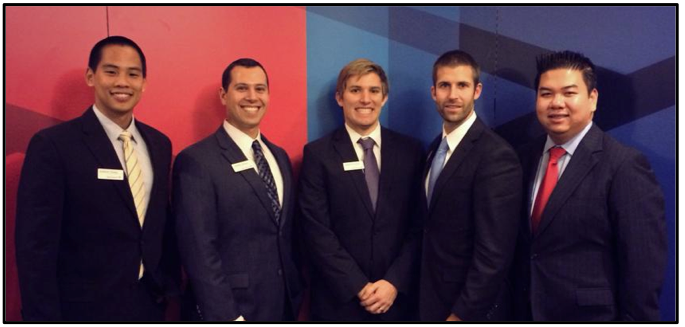
Results: National Program Rollout, Improved Morale, and Decreased Attrition
After sharing the feedback with Erin, our team expanded the series to Phoenix, Dallas, and Charlotte. Our team chose Phoenix and Dallas because they experienced suburban sprawl similar to Los Angeles and there was opportunity to strengthen the sense of community. As for Charlotte, a Campus Talent Program manager invited us to bring the series there. This was an honor because most of the bank’s decisions are made in Charlotte. We had started something innovative in California, and headquarters wanted in.
The program contributed to decreasing CAAP attrition in Los Angeles by 25 percent.
The program is still thriving in all four markets: LA, Phoenix, Dallas, and Charlotte.
 Stephanie Lang